
Supporting Women In STEM: The SharpMinds Guide
Updated: Dec 21, 2025
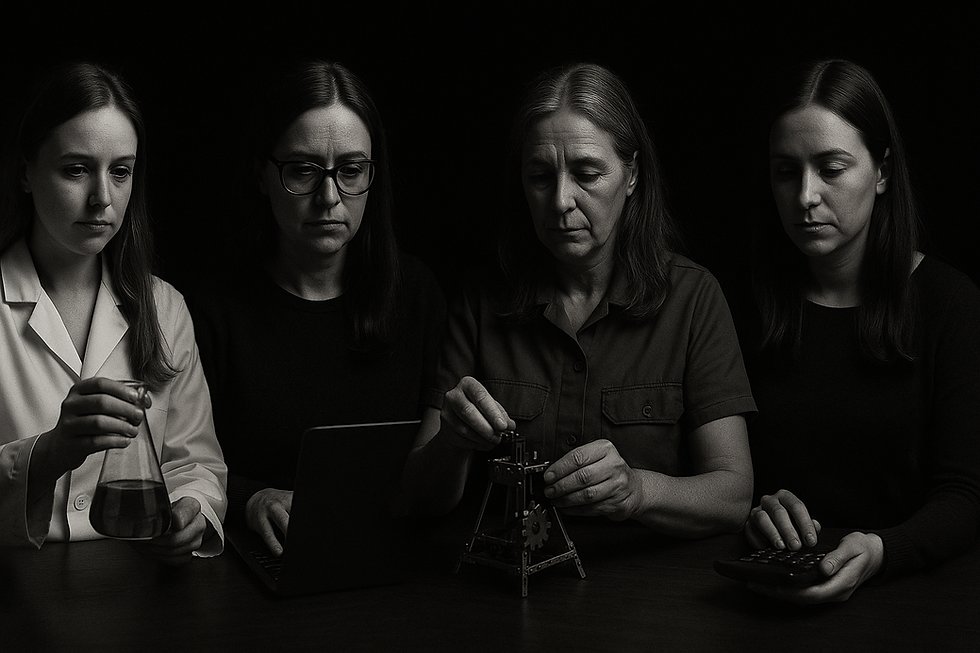
By the time they reach 35, half of the women who start careers in STEM have already left.
That’s a stark number — but it’s also why I believe so strongly in telling these stories. Because behind every statistic are women who’ve carved their own paths, challenged cultures, and built careers in spaces not designed for them. And every woman who stays and thrives makes it easier for the next one to do the same.
Over more than two decades in engineering, I’ve been the only woman in the room more times than I can count. I’ve launched products on three continents, worked with teams from Shenzhen to Venice to Saigon, and navigated leadership cultures that weren’t built with people like me in mind. Now, through SharpMinds, I coach and mentor women in STEM — and what I see today gives me reason for optimism.
This guide pulls together the latest data, what I’ve learned over 21 years, and the stories behind the numbers. Whether you’re a woman navigating your own career, a leader building an inclusive team, or an ally wanting to drive change, this is your starting point to know the facts — and to see what’s possible.
Back to Reality (and What’s Changing)
The UK engineering industry still faces a retention challenge. But here’s the good news: it’s a challenge we’re talking about more openly than ever before, and that shift in conversation is the first step to change.
35% of women choose STEM subjects at university.
Women currently make up 15.7% of the UK’s engineering and tech workforce, down from 16.5% in 2022.
The sharpest drop-off happens between ages 35 and 44.
At leadership level, only 11% of executives in engineering and manufacturing are women.
Yes, the numbers tell us we have work to do — but they also show us where to focus. Every organisation that makes a deliberate effort to retain women, every leader who champions inclusion, every woman who stays and progresses is part of the solution.
Read my blogs for other insights: Why Supporting Women in STEM Still Matters,
The Leaky Pipeline (and How to Plug It)
In coaching, I hear the same patterns: women overlooked for stretch projects, working harder to “prove” themselves, promotions going to someone who “feels like a better fit.”
But here’s the shift I’m seeing: more women are naming these experiences, leaders are recognising the cost of attrition, and companies are experimenting with new ways to keep talent.
From structured mentoring in corporates to grassroots peer support in startups, small interventions are helping women feel less isolated and more supported. It’s not perfect, but it’s progress — and it shows what’s possible when organisations listen.
Related reading: Why Women in STEM Keep Leaving (and How to Stop It)
Unconscious Biases (and How to Challenge Them)
Biases still exist — affinity, attribution, maternal, the tightrope bias amongst others — but the more we shine a light on them, the more power we have to challenge them.
In mentoring groups, I see the difference when women have the language to describe what’s happening. Suddenly, it’s not “something wrong with me” — it’s a system at play.
And when leaders are aware of these patterns, they can start to change how they hire, promote, and recognise talent.
Bias isn’t an unsolvable problem. It’s a call to action.
Related reading: Supporting Women in STEM: Expectations
Change the Women, Not the System? Not Quite.
“Women just need more confidence.” I’ve heard that line so many times.
But confidence isn’t the issue — it’s the outcome. When women are consistently valued, credited, and given opportunities, confidence grows naturally. And the good news is: this is something we can build.
In coaching, I’ve seen women grow confidence through practical tools: preparing for critical conversations, recognising strengths, clarifying leadership identity. With the right support, they stop shrinking to fit and start owning the space they deserve.
Related reading: 5 Ways to Build Confidence in a Male-Dominated Industry, Lean Into Your Feminine Leadership Style
How Can We Help? Allyship in Action
Change doesn’t happen because women work harder. It happens when cultures shift — and allyship is one of the simplest, most powerful tools to make that happen.
And here’s the hopeful part: I’ve seen it work and I've reaped the rewards of it myself. Teams transform when just a handful of people decide to step up. Women feel heard, supported, and more willing to lead. The atmosphere changes. Retention improves.
Allyship doesn’t need grand gestures. It’s the everyday actions that count: giving credit, amplifying voices, nominating women for projects, calling out bias. Anyone can start today.
Related reading: Empowering Women in STEM Through Allyship
Plugging the Leak: What’s Working
It’s not enough to just “fix the pipeline.” We need workplaces where women can thrive once they’re in.
The encouraging news? More organisations are experimenting with what works:
Sponsorship, not just mentorship.
Clearer pathways to leadership.
Flexible roles that don’t limit progression.
Structures that ensure women are in decision-making spaces.
These aren’t theories. They’re being tested right now — and the results are promising.
Related reading: Setting Up Women in STEM for Success: Managing Up, Engineering Your Future: Proven Strategies for Women in STEM
It’s Not Just at Home… Global Lessons
From Shenzhen to Vietnam to Italy, I’ve seen how culture shapes opportunity.
In some places, the barriers are explicit; in others, they’re subtle. But in every context, I’ve also seen resilience, creativity, and leadership from women who find ways to succeed.
Those stories remind me that change doesn’t only come from policies — it comes from people. Women supporting women, leaders making small shifts, allies choosing courage over silence.
Related reading: Women in STEM: Successful Asia Business Trips
A Better Future for Women in STEM
Here’s what I’ve learned after 21 years: progress isn’t just possible — it’s happening.
Change takes time, but it starts with the everyday moments and it starts with you:
Who we hire.
Who we mentor.
Who we credit.
Who we make space for.
It happens when leaders and allies make inclusion a priority. It happens when organisations measure not just who joins, but who stays. And it happens when women feel supported to define success on their own terms.
The encouraging part? None of this requires one monumental act. It’s built on small, deliberate steps — the kind that can change someone’s day, year, or career. I've shared my highlights over the past 20 years of what really made a difference to me.
Related reading: 21 Years of Women in STEM – The Small Things,
If you want to go deeper, explore the linked articles above, join my newsletter, or If you’re carrying something similar and want space to think it through, I offer a short 30-minute coaching taster you can book anytime. There’s no one-size-fits-all solution, but we can start by having better conversations — and taking small, deliberate steps towards change.
References
UCAS (2023). STEM Subject Choices by Gender.
EngineeringUK (2023). Women in Engineering and Technology Report.
The Engineer (2022). Women Count Report Shows Gender Disparity in Engineering.
Sieghart, M.A. (2021). The Authority Gap.
McKinsey & Company (2022). Women in the Workplace Report.


Comments